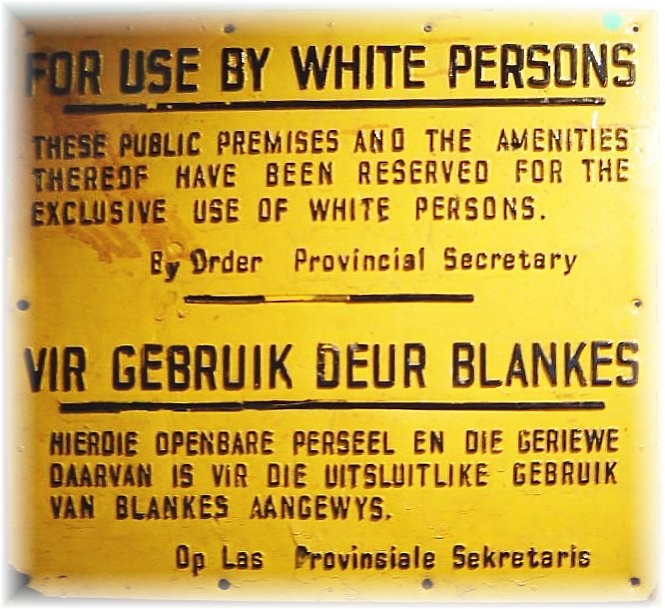
I saw a flash ad for an upcoming episode of Henry Louis Gates Jr.’s Finding Your Roots. In the split second of the flash, I saw a “whites only” sign in one of their clips. It brought a flood of memories.
This separation of peoples was far reaching – not only schools and neighborhoods, but also toilets and drinking fountains. Facilities and water.
This reminded me also of a Facebook chat I saw in the last couple of years about the water fountains we had in Graymont School. Graymont was the first all-white elementary school to be integrated (1963) in Birmingham, Alabama. This chat was by African Americans; they were talking about the small and large water fountains at Graymont and thought they must have been the black and white fountains. But in fact those were there before the school was integrated. They were actually for short and tall students.
This made me think about today’s world of integrated toilets and lives and places. There might be reason to recall memories of those days of separation in hopes they will not be repeated.
I was given to stomach upsets all my life, still have them, and when I have to go, I have to go.
“Before” formal integration – if there is such a phrase – when I was very little, I had diarrhea and the white toilet at Newberry’s (see below) was “occupied.” Door locked and all. Minutes went on and on and I had tears coming out of my eyes. I was about, I don’t know, 6, 7??? Maybe less. I could not have been much more.
The toilet for African Americans did not have any lock and there were two stalls, sort of, (two stalls and a sink at the side but there were no doors on the stalls – open and all). My grandmother pushed open the door, pushed me in, and called out it was an emergency. The occupant, a black lady, furrowed her brow, I did not think at me, but at the nerve of my grandmother. But the lady helped me and we all went our separate, unequal ways.
I have heard some young folks say, “it was not so bad” (the life of African Americans before, during and after integration). “My daddy, my granny told me, it was not so bad for black folk.”
Phooey, it was awful, horrible, murderous and we never want to see those evils in our country or our world again. I had to unlearn the awful hells of a hellish time. We must guard against these evil words and deeds today, just as we had to become new people in love before.
We must take care that all peoples have facilities and fountains.
Hoping for all peoples from anywhere and everywhere, the earth, the water, the sky. May they always be there for everyone, solid, and life refreshing, and sweet smelling.
We do not want a return to any yesterday, or any today, or tomorrow, that holds these evils. We do not want just one religion or another, but to love and embrace all peoples, all nationalities.
Like it was yesterday – Newberry’s lunch counter in Birmingham, Alabama.
 l
l
The feature photo is from a public domain wikipedia – I donate every time I can. They have given us so much.
By Dewet – Derived from Aprt.jpg on en.wiki, corrected perspective and lighting somewhat. Permission from photographer here., Public Domain, https://commons.wikimedia.org/w/index.php?curid=48957

 Marionetta Strung-Out